Van Swieten's Secret
Vienna, the middle of November 1792.
 he city had already taken on the colours of winter.
Twilight had fallen early upon the streets, slipping between palaces and carriages with a grey and silent patience. A northern wind ran along the façades of the imperial city, shaking the signs above the inns; in the narrower streets it lifted dead leaves into small whirlwinds and drove them against heavy doorways.
Inside Baron Gottfried van Swieten’s residence, however, the illuminated windows promised warmth.
The old Baron had given instructions for one of the larger rooms to be prepared in a particular manner that evening. Extra candles burned in the chandeliers; logs crackled generously in the fireplaces; and, in the centre of the room, as though they were two guests of honour, stood two ancient Italian harpsichords.
They were instruments of extraordinary beauty.
One bore the name Giusti, the other Grimaldi. Both, despite their age, possessed a severe elegance and an almost aristocratic dignity. The Baron had received them under circumstances which none of his friends had ever fully understood.
Many years earlier, when van Swieten had still been engaged in diplomatic service and was living in Brussels, a man had appeared unexpectedly at his door.
He had not announced himself.
He had offered no satisfactory explanation.
He had merely asked to see the Dutch diplomat.
The visitor was of middle height and dressed in dark clothes, old-fashioned even for that time. He spoke with an Italian inflection that van Swieten would never forget. Two carefully closed carts had accompanied him. Inside them stood the two harpsichords.
‘I ask you to keep them safe,’ the stranger had said.
‘For how long?’
The man had smiled.
‘Until music understands why you have kept them.’
Van Swieten had demanded a name.
The stranger had lowered his head.
‘Not today.’
And then he had gone.
The diplomat had never seen him again.
Forty years had passed.
And on that November evening, while Vienna was still learning how to live without Wolfgang Amadeus Mozart, the mystery of those instruments was about to return.
Mozart had been dead only a few months.
His name was still spoken with a peculiar care, as the names of those whose deaths seem too recent to belong to history are spoken. In the conversations of the capital, the composer continued to live: in operas still performed, in music played in drawing rooms, and in the memories of friends.
And, naturally, in the memory of his young widow.
Constanze Mozart had arrived at the Baron’s residence accompanied by a young officer of noble appearance, whose identity none of the other guests seemed able to establish with certainty. His manners were impeccable, his uniform elegant, and he possessed that discretion which, in Viennese society, could sometimes speak more eloquently than any title.
Constanze appeared composed.
But van Swieten, who had known enough men and enough masks in his lifetime, could see something in her eyes that no good breeding could conceal.
Loss.
Weariness.
And perhaps the question left behind by every premature death: what might have happened if time had been more generous?
Joseph Haydn was also among the guests.
The composer, by then famous far beyond Vienna, was speaking with acquaintances beside the fireplace. His face retained the kindly attentiveness for which he was known, though the conversation often fell silent, as if everyone present understood that, on such an evening, there was no need to fill every moment with words.
Not far away, a young man of twenty-two was observing the room.
Ludwig van Beethoven.
He had arrived in Vienna only recently, bringing with him ambition, a difficult temperament, and an inner force which few could yet measure. He looked upon Haydn with respect, but also with the restless impatience of a man who had not been born to remain in anyone’s shadow.
The two harpsichords had caught his attention.
‘Are they Italian?’ he asked.
Van Swieten, who had overheard him, turned.
‘Very Italian.’
Beethoven stepped closer.
He barely touched the edge of the Giusti, not daring to place his fingers upon the keys.
‘They are old.’
‘Older than you imagine.’
‘And do they still work?’
The Baron smiled.
‘That, young Beethoven, is a question one should never ask an instrument in Vienna. One should sit down and listen to its answer.’
Haydn laughed softly.
The evening continued.
As often happened at van Swieten’s gatherings, the conversation returned to the great masters of the past: Johann Sebastian Bach and George Frideric Handel.
The Baron spoke of them with a devotion that some considered excessive, though nobody could mistake it for superficial enthusiasm. He had helped introduce Vienna to works that many regarded as belonging to a distant and forgotten world. To him, however, great music knew no dead centuries.
It was a continent.
And every generation could still discover new regions within it.
‘Mozart understood that,’ he said at one point.
Nobody asked who he meant.
Everyone knew.
Van Swieten looked towards Constanze.
‘Your husband understood Bach.’
She lowered her eyes.
‘He loved him.’
‘Yes.’
The Baron was silent for a moment.
‘And Bach, I am convinced, would have understood him.’
It was then that the servants opened the doors.
The icy wind entered the room with a brief swirl of cold air.
A servant stepped forward.
‘Your Excellency… a guest has arrived.’
Van Swieten frowned.
‘A guest? At this hour?’
‘He says his name is Falerno Ducande.’
The name fell into the room like a solitary note.
Nobody reacted.
Nobody except the Baron.
His glass remained suspended in his hand.
For an instant, the colour seemed to leave the old man’s face.
‘Show him in.’
The servant withdrew.
Then a man appeared.
He was wrapped in a dark cloak. His hair, long and now entirely white, fell to his shoulders. His face was thin, almost ascetic, while his eyes possessed a liveliness that seemed to contradict his age.
Van Swieten rose slowly.
‘You.’
The man smiled.
‘I am pleased that memory has not deserted you, Baron.’
Constanze looked towards Haydn.
Haydn looked towards Beethoven.
Beethoven said nothing.
Van Swieten took several steps forward.
‘Brussels.’
‘Brussels.’
‘Forty years.’
‘More or less.’
‘You brought—’
The stranger raised a hand.
‘Yes.’
His eyes rested upon the two instruments.
‘You have kept them well.’
The Baron seemed about to ask a hundred questions.
Yet he asked none.
Falerno Ducande crossed the room slowly.
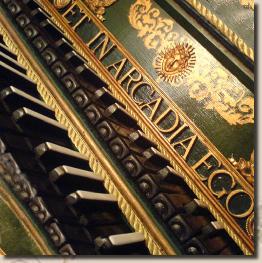
‘A Roman shepherd of Arcadia,’ he finally introduced himself, with a slight bow. ‘Or at least that is the name I have been permitted to bear.’
Van Swieten stared at him.
‘Why are you here?’
The man stopped before the harpsichords.
Outside, the wind continued to strike the windows.
‘Because a man you knew has died.’
Silence fell over the room.
Constanze clasped her hands.
‘Mozart,’ said Haydn.
Falerno bowed his head.
‘Mozart.’
Then he turned towards van Swieten.
‘And because these instruments have waited long enough.’
He sat down at the first harpsichord.
The Giusti.
Nobody had time to ask what he meant.
His hands descended upon the keys.
And the music began.
At first came the sonatas of the young Mozart.
Pages born in the Salzburg years and during the first journeys, when the composer was still discovering the paths before him, though he already possessed a naturalness that made it impossible to mistake him for anyone else. Falerno played them without display, as though he were telling a story he had always known.
One sonata followed another.
The early works, bright and impetuous.
Then those in which Mozart’s writing acquired greater breadth, greater depth, greater theatre.
Upon the Giusti, different musical landscapes appeared: the dramatic power of a great sonata in a minor key; the nobility of slow movements capable of suspending time; the elegance of Viennese pages in which every phrase seemed to converse with an invisible companion.
Beethoven had moved closer.
He was no longer seated.
He stood perfectly still.
Falerno changed instruments.
The Grimaldi answered with a different voice: finer, brighter, almost capable of exposing the inner lines of the music. The sonatas flowed onwards, from youthful experiments to works of complete maturity.
There was a celebrated sonata of playful spirit, its final movement seeming to challenge the world itself.
Another, monumental in scale, built like a vast house in which every room opened onto a new surprise.
And a work famous for its apparent simplicity, whose clarity concealed an entire universe.
Constanze could no longer restrain her tears.
The young officer beside her did not attempt to comfort her.
Perhaps he understood that there are sorrows for which even the kindest gesture can feel like an interruption.
Haydn listened with his head slightly inclined.
Van Swieten, meanwhile, never took his eyes from Falerno.
‘Who are you?’ he murmured.
But the man could not hear him.
Or perhaps he chose not to.
The night advanced.
The candles burned lower.
Servants entered silently to replace them.
And Falerno continued.
He alternated between the Giusti and the Grimaldi with a precision that seemed to obey some invisible law, as though every sonata had waited for years for the instrument destined to give it voice.
Then, suddenly, everything changed.
Falerno stopped.
Nobody applauded.
Nobody dared speak.
The man remained seated, his hands suspended above the keyboard.
Then he began a Fantasia.
Van Swieten held his breath.
This music did not proceed like a sonata.
It sought no straight road.
It seemed to think.
It hesitated.
It interrupted its own argument only to begin again somewhere else.
The Baron knew that world.
Carl Philipp Emanuel Bach returned to his mind: the sudden turns of feeling, the unexpected changes, the pauses that could seem more eloquent than notes themselves.
‘Yes,’ he whispered.
It was a word addressed to nobody.
And perhaps to the past.
The first Fantasia slowly dissolved.
Then came the second.
Broader.
Darker.
More terrible.
Falerno allowed it to grow within the room like a storm held back for too long. The modulations seemed to open doors into corridors nobody had ever walked. The music advanced and halted; it questioned and refused to answer.
Van Swieten did not move.
This was the Mozart he loved most deeply.
Not the prodigy.
Not the conqueror of theatres.
But the man capable of looking into the abyss and transforming it into order.
Beethoven’s eyes were fixed upon the keyboard.
For the first time that evening, Haydn turned towards him.
The young man did not notice.
The music had already claimed all his attention.
When Falerno finished, nobody spoke.
For several seconds, only the wind could be heard.
Then the performer began again.
The final sonatas arrived like the last chapters of a long life.
There were still grace, humour and light.
But there was something else as well.
A simplicity that had been earned.
A musical language that no longer needed to prove anything.
The night grew deep.
Vienna slept.
Within van Swieten’s residence, however, time seemed to have stopped.
At last Falerno played the final note.
The sound remained suspended.
Then it vanished.
Nobody applauded immediately.
It was as though the music had imposed a silence that nobody could break.
Falerno rose.
Van Swieten stepped forward.
‘Wait.’
The man gathered his cloak.
‘I must thank you.’
Falerno turned.
For the first time, his gaze seemed truly ancient.
‘No, Baron.’
‘You have just—’
‘I have merely given one night back to music.’
Van Swieten searched for words.
‘Who are you, truly?’
Falerno smiled.
‘That question always arrives too late.’
Then he walked towards the door.
‘Wait!’ the Baron cried.
But Falerno had already crossed the corridor.
Van Swieten followed him.
The servants turned.
The main door stood open.
Outside, the night was black.
The wind swept through the courtyard.
There was nobody there.
No carriage.
No horse.
No trace in the thin snow that had begun to fall.
The Baron remained upon the threshold.
Behind him, in the great room, Constanze Mozart was still seated in silence.
Haydn was watching the flames in the fireplace.
Beethoven stood before the two harpsichords.
Slowly, the young man raised his hand and touched a key.
A single note.
Van Swieten returned to the room.
‘Do not,’ he said.
Beethoven turned.
‘Why not?’
The Baron looked at the two instruments.
Then he thought of Brussels.
Of the nameless man.
Of forty years of silence.
And of that night.
‘Because,’ he finally replied, ‘I am not yet certain that we have truly heard what we believe we have heard.’
Outside, Vienna continued to sleep.
And in the house of Baron Gottfried van Swieten, the two ancient Italian harpsichords once again awaited silence.
As though they knew that music sometimes belongs not only to those who write it.
But also to those who keep it safe.
A note from the editors
This story is entirely a work of imagination created by the editors of this website. Although certain characters, places and musical references belong to the real history of late eighteenth-century Vienna, the events described here, the character of Falerno Ducande, the fictional history of the two harpsichords and the extraordinary encounter portrayed in the narrative are inventions of historical fiction.
The story was created with the assistance of technologies offered by OpenAI.
saladelcembalo.org, 2026 Aug 31
Il segreto di van Swieten
Vienna, metà novembre 1792.
 a città aveva già assunto il colore dell’inverno.
Il crepuscolo era calato presto sulle strade, insinuandosi fra i palazzi e le carrozze con una lentezza grigia e silenziosa. Il vento, venuto da nord, correva lungo le facciate del centro imperiale e scuoteva le insegne delle locande; nelle vie più strette sollevava turbini di foglie morte e li spingeva contro i portoni.
Nella dimora del barone Gottfried van Swieten, invece, le finestre illuminate promettevano calore.
Il vecchio barone aveva dato disposizione che quella sera una delle sale più grandi fosse preparata in modo particolare. Candele supplementari ardevano nei candelabri; la legna crepitava generosamente nei camini; e, al centro della stanza, quasi fossero due ospiti d’onore, erano stati collocati due antichi clavicembali italiani.
Erano strumenti di straordinaria bellezza.
Uno portava il nome di Giusti, l’altro quello di Grimaldi. Entrambi, nonostante gli anni, conservavano una grazia severa e una dignità quasi aristocratica. Il barone li aveva ricevuti in circostanze che nessuno dei suoi amici aveva mai saputo spiegare interamente.
Molti anni prima, quando van Swieten era ancora impegnato nella carriera diplomatica e risiedeva a Bruxelles, un uomo si era presentato improvvisamente alla sua porta.
Non aveva annunciato il proprio arrivo.
Non aveva fornito spiegazioni soddisfacenti.
Aveva soltanto chiesto di vedere il diplomatico olandese.
L’uomo era di statura media, portava abiti scuri, antiquati persino per quell’epoca, e parlava con un’inflessione italiana che van Swieten non avrebbe mai dimenticato. Con lui erano giunti due carri accuratamente chiusi. Dentro vi erano i due clavicembali.
«Vi chiedo di custodirli», aveva detto lo sconosciuto.
«Per quanto tempo?»
L’uomo aveva sorriso.
«Finché la musica non saprà perché li avete custoditi.»
Van Swieten aveva preteso un nome.
Lo sconosciuto aveva chinato il capo.
«Non oggi.»
Poi se n’era andato.
Il diplomatico non lo aveva mai più rivisto.
Quarant’anni erano trascorsi da allora.
E quella sera di novembre, mentre Vienna cercava ancora di abituarsi all’assenza di Wolfgang Amadeus Mozart, il mistero di quegli strumenti era sul punto di riaprirsi.
Mozart era morto da meno di un anno.
Il suo nome era ancora pronunciato con una cautela particolare, come accade con i nomi di coloro la cui morte sembra troppo recente per appartenere davvero al passato. Nelle conversazioni della capitale, il compositore continuava a vivere: nelle opere rappresentate, nelle musiche suonate nei salotti, nei ricordi degli amici.
E, naturalmente, nella memoria della giovane vedova.
Constanze Mozart era arrivata alla dimora del barone accompagnata da un giovane ufficiale di nobile aspetto, del quale nessuno degli altri ospiti sembrava conoscere con certezza l’identità. Aveva modi impeccabili, un’uniforme elegante e quella discrezione che, nei salotti viennesi, poteva essere più eloquente di qualsiasi titolo.
Constanze appariva composta.
Ma van Swieten, che aveva conosciuto abbastanza bene gli uomini e le loro maschere, vedeva nei suoi occhi qualcosa che nessuna buona educazione poteva nascondere.
La perdita.
E la stanchezza.
E forse anche la domanda che rimane dopo ogni morte prematura: che cosa sarebbe accaduto se il tempo fosse stato più generoso?
Tra gli ospiti vi era anche Joseph Haydn.
Il compositore, ormai celebre ben oltre Vienna, parlava con alcuni conoscenti presso il camino. Il suo volto esprimeva quella bonaria attenzione che gli era propria, ma la conversazione si interrompeva spesso, come se ciascuno dei presenti sapesse che, in una serata simile, non era necessario parlare continuamente.
Poco lontano, un giovane di ventidue anni osservava la stanza.
Ludwig van Beethoven.
Era arrivato a Vienna da relativamente poco, portando con sé l’ambizione, il carattere difficile e una forza interiore che pochi avrebbero potuto allora misurare. Guardava Haydn con rispetto, ma anche con l’inquietudine di chi non è nato per rimanere all’ombra di nessuno.
I due clavicembali attiravano la sua attenzione.
«Sono italiani?» domandò.
Van Swieten, che aveva udito la domanda, si voltò.
«Molto italiani.»
Beethoven si avvicinò.
Sfiorò appena il bordo del Giusti, senza osare toccare la tastiera.
«Sono antichi.»
«Più antichi di quanto voi immaginiate.»
«E funzionano ancora?»
Il barone sorrise.
«Questa, giovane Beethoven, è una domanda che a Vienna non bisognerebbe mai fare a uno strumento. Bisogna sedersi e ascoltare la risposta.»
Haydn rise piano.
La serata proseguì.
Come spesso accadeva nelle riunioni organizzate da van Swieten, la conversazione tornò ai grandi maestri del passato. Johann Sebastian Bach. Georg Friedrich Händel.
Il barone parlava di loro con una devozione che alcuni trovavano eccessiva, ma che nessuno poteva giudicare superficiale. Aveva fatto conoscere a Vienna pagine che molti consideravano appartenenti a un mondo ormai remoto. Per lui, invece, la grande musica non conosceva epoche morte.
Era un continente.
E ogni generazione poteva ancora scoprirne nuove regioni.
«Mozart lo aveva capito», disse a un certo punto.
Nessuno domandò chi fosse il soggetto della frase.
Tutti sapevano.
Van Swieten guardò Constanze.
«Vostro marito comprendeva Bach.»
Lei abbassò gli occhi.
«Lo amava.»
«Sì.»
Il barone rimase in silenzio per qualche istante.
«E Bach, ne sono convinto, avrebbe compreso lui.»
Fu allora che i domestici aprirono le porte.
Il vento gelido entrò nella stanza insieme a un breve vortice d’aria.
Un servitore avanzò.
«Eccellenza… è arrivato un ospite.»
Van Swieten aggrottò la fronte.
«Un ospite? A quest’ora?»
«Dice di chiamarsi Falerno Ducande.»
Il nome cadde nella stanza come una nota isolata.
Nessuno reagì.
Nessuno, tranne il barone.
Il suo bicchiere rimase sospeso a mezz’aria.
Per un istante il volto dell’anziano uomo parve svuotarsi di ogni colore.
«Fatelo entrare.»
Il servitore si ritirò.
Poi apparve un uomo.
Era avvolto in un mantello scuro. I capelli, lunghi e ormai completamente bianchi, gli scendevano sulle spalle. Il volto era sottile, quasi ascetico, e i suoi occhi possedevano una vivacità che sembrava contraddire la sua età.
Van Swieten si alzò lentamente.
«Voi.»
L’uomo sorrise.
«Sono lieto che la memoria non vi abbia abbandonato, barone.»
Constanze guardò Haydn.
Haydn guardò Beethoven.
Beethoven non disse nulla.
Van Swieten fece alcuni passi avanti.
«Bruxelles.»
«Bruxelles.»
«Quarant’anni.»
«Più o meno.»
«Voi avete portato…»
Lo straniero sollevò una mano.
«Sì.»
I suoi occhi si posarono sui due strumenti.
«Li avete custoditi bene.»
Il barone sembrò sul punto di rivolgergli cento domande.
Ma non ne pronunciò nemmeno una.
Falerno Ducande attraversò lentamente la sala.
«Pastor romano dell’Arcadia», si presentò infine, con un lieve inchino. «O almeno questo è il nome che mi è stato concesso di portare.»
Van Swieten rimase a osservarlo.
«Perché siete qui?»
L’uomo si fermò davanti ai clavicembali.
Fuori il vento continuava a battere contro le finestre.
«Perché un uomo che avete conosciuto è morto.»
Nella stanza calò il silenzio.
Constanze strinse le mani.
«Mozart», disse Haydn.
Falerno inclinò il capo.
«Mozart.»
Poi si voltò verso van Swieten.
«E perché questi strumenti hanno aspettato abbastanza.»
Si sedette al primo clavicembalo.
Al Giusti.
Nessuno ebbe il tempo di chiedergli che cosa intendesse.
Le sue mani si posarono sulla tastiera.
E la musica cominciò.
All’inizio furono le sonate del giovane Mozart.
Pagine nate negli anni di Salisburgo e dei primi viaggi, quando il compositore cercava ancora la propria strada ma già possedeva una naturalezza che rendeva impossibile confonderlo con chiunque altro. Falerno le suonava senza ostentazione, come se stesse raccontando una storia che conosceva da sempre.
Una sonata conduceva all’altra.
Le prime, luminose e impetuose.
Poi quelle in cui la scrittura acquistava maggiore ampiezza, più profondità, più teatro.
Sul Giusti apparvero paesaggi sonori diversi: il vigore drammatico di una grande sonata in tonalità minore, la nobiltà di movimenti lenti capaci di sospendere il tempo, l’eleganza di pagine viennesi dove ogni frase sembrava conversare con un interlocutore invisibile.
Beethoven si era avvicinato.
Non sedeva più.
Stava in piedi, immobile.
Falerno cambiò strumento.
Il Grimaldi rispose con una voce differente: più sottile, più luminosa, quasi capace di mettere a nudo le linee interne della musica. Le sonate scorrevano una dopo l’altra, dalle prime prove dell’adolescenza fino alle opere della piena maturità.
Una celebre sonata dal carattere giocoso, con il suo movimento conclusivo che sembrava sfidare il mondo.
Un’altra, di dimensioni monumentali, costruita come un vasto edificio nel quale ogni stanza conduceva a una nuova sorpresa.
Una pagina celeberrima, apparentemente semplice, che nella sua chiarezza nascondeva un universo.
Constanze non riuscì più a trattenere le lacrime.
Il giovane ufficiale al suo fianco non tentò di consolarla.
Forse aveva compreso che esistono dolori ai quali perfino il gesto più gentile può sembrare un’interruzione.
Haydn ascoltava con la testa leggermente inclinata.
Van Swieten, invece, non distoglieva gli occhi da Falerno.
«Chi siete?» mormorò.
Ma l’uomo non poteva sentirlo.
O forse non voleva.
La notte avanzava.
Le candele diminuivano.
I domestici entravano silenziosamente per sostituirle.
E Falerno continuava.
Alternava il Giusti e il Grimaldi con una precisione che sembrava obbedire a una legge invisibile. Come se ogni sonata avesse atteso per anni lo strumento destinato a pronunciarla.
Poi, improvvisamente, tutto cambiò.
Falerno si fermò.
Nessuno applaudì.
Nessuno osò parlare.
L’uomo rimase seduto, le mani sospese sopra la tastiera.
Quindi iniziò una Fantasia.
Van Swieten trattenne il respiro.
Quella musica non procedeva come una sonata.
Non cercava una strada diritta.
Sembrava pensare.
Esitava.
Interrompeva il proprio discorso per ricominciarlo altrove.
Il barone conosceva quel mondo.
Gli tornò alla mente Carl Philipp Emanuel Bach: le improvvise svolte dell’animo, gli scarti inattesi, le pause che sembravano più eloquenti delle note.
«Sì», sussurrò.
Era una parola rivolta a nessuno.
E forse al passato.
La prima Fantasia si dissolse lentamente.
Poi venne la seconda.
Più vasta.
Più oscura.
Più terribile.
Falerno la lasciò crescere nella stanza come una tempesta trattenuta troppo a lungo. Le modulazioni sembravano aprire porte verso corridoi che nessuno aveva mai percorso. La musica avanzava e si arrestava; interrogava e rifiutava di rispondere.
Van Swieten era immobile.
Quello era il Mozart che amava più profondamente.
Non il bambino prodigio.
Non il trionfatore dei teatri.
Ma l’uomo capace di guardare nell’abisso e trasformarlo in ordine.
Beethoven aveva gli occhi fissi sulla tastiera.
Per la prima volta quella sera, Haydn si voltò verso di lui.
Il giovane non se ne accorse.
La musica aveva già conquistato tutta la sua attenzione.
Quando Falerno terminò, nessuno parlò.
Per qualche secondo si udì soltanto il vento.
Poi l’esecutore riprese.
Le ultime sonate arrivarono come l’ultima parte di una lunga vita.
C’erano ancora grazia, umorismo e luminosità.
Ma anche qualcosa di diverso.
Una semplicità conquistata.
Una scrittura che non aveva più bisogno di dimostrare nulla.
La notte diventò profonda.
Vienna dormiva.
Nella dimora di van Swieten, invece, il tempo sembrava essersi fermato.
Infine Falerno suonò l’ultima nota.
Il suono rimase sospeso.
Poi svanì.
Nessuno applaudì immediatamente.
Era come se la musica avesse imposto un silenzio che nessuno poteva infrangere.
Falerno si alzò.
Van Swieten fece un passo avanti.
«Aspettate.»
L’uomo raccolse il mantello.
«Devo ringraziarvi.»
Falerno si voltò.
Per la prima volta, il suo sguardo sembrò davvero antico.
«No, barone.»
«Avete appena…»
«Io ho soltanto restituito una notte alla musica.»
Van Swieten cercò le parole.
«Chi siete veramente?»
Falerno sorrise.
«Questa domanda arriva sempre troppo tardi.»
Poi si diresse verso la porta.
«Aspettate!» gridò il barone.
Ma Falerno aveva già attraversato il corridoio.
Van Swieten lo seguì.
I domestici si voltarono.
La porta principale era aperta.
Fuori, la notte era nera.
Il vento attraversava il cortile.
Non c’era nessuno.
Nessuna carrozza.
Nessun cavallo.
Nessuna traccia nella neve sottile che aveva cominciato a cadere.
Il barone rimase sulla soglia.
Alle sue spalle, nella grande sala, Constanze Mozart era ancora seduta in silenzio.
Haydn guardava le fiamme del camino.
Beethoven era davanti ai due clavicembali.
Il giovane sollevò lentamente una mano e sfiorò un tasto.
Una sola nota.
Van Swieten tornò nella stanza.
«Non fatelo», disse.
Beethoven si voltò.
«Perché?»
Il barone guardò i due strumenti.
Poi pensò a Bruxelles.
All’uomo senza nome.
A quarant’anni di silenzio.
E a quella notte.
«Perché», rispose infine, «non sono ancora certo che abbiamo davvero ascoltato ciò che crediamo di aver ascoltato.»
Fuori, Vienna continuava a dormire.
E nella casa del barone Gottfried van Swieten, i due antichi clavicembali italiani attesero nuovamente il silenzio.
Come se sapessero che la musica, qualche volta, non appartiene soltanto a chi la scrive.
Ma anche a chi la custodisce.
Nota dei curatori
Questo racconto è interamente frutto della fantasia dei curatori del sito. Sebbene alcuni personaggi, luoghi e riferimenti musicali appartengano alla storia reale della Vienna di fine Settecento, gli avvenimenti narrati, il personaggio di Falerno Ducande, la vicenda romanzata dei due clavicembali e l’incontro descritto sono elementi di invenzione letteraria.
La narrazione è stata realizzata con il supporto delle tecnologie offerte da OpenAI.
saladelcembalo.org, 31 agosto 2026









 he city had already taken on the colours of winter.
 a città aveva già assunto il colore dell’inverno.